How small actions shape a more responsible festival experience
Large-scale events generate large-scale material flows. At a festival, this reality becomes visible by recycling, recycle kits, packaging, food waste, the Recycle Club and temporary infrastructure. Recycling is not a side activity. It is a practical system that only works when everyone understands their role within it.
Why sorting matters in a festival context
Recycling on a festival site differs from household recycling. Materials are deposed and collected at high speed, in shared spaces, and processed very quickly. When waste streams are mixed, recovery becomes significantly more complex and, in some cases, impossible.
Correct sorting helps:
- Keep material streams clean and processable
- Reduce contamination between recyclables and residual waste
- Support reuse and recycling systems already in place
Recycling is not about perfection. It is about collective consistency.
How the recycling system is set up
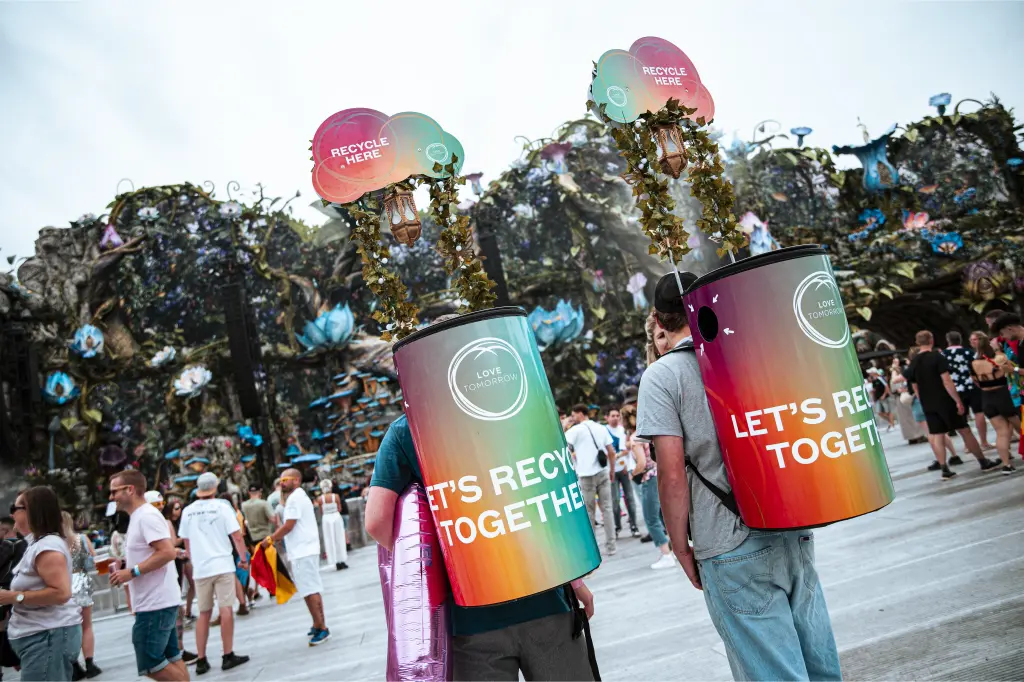
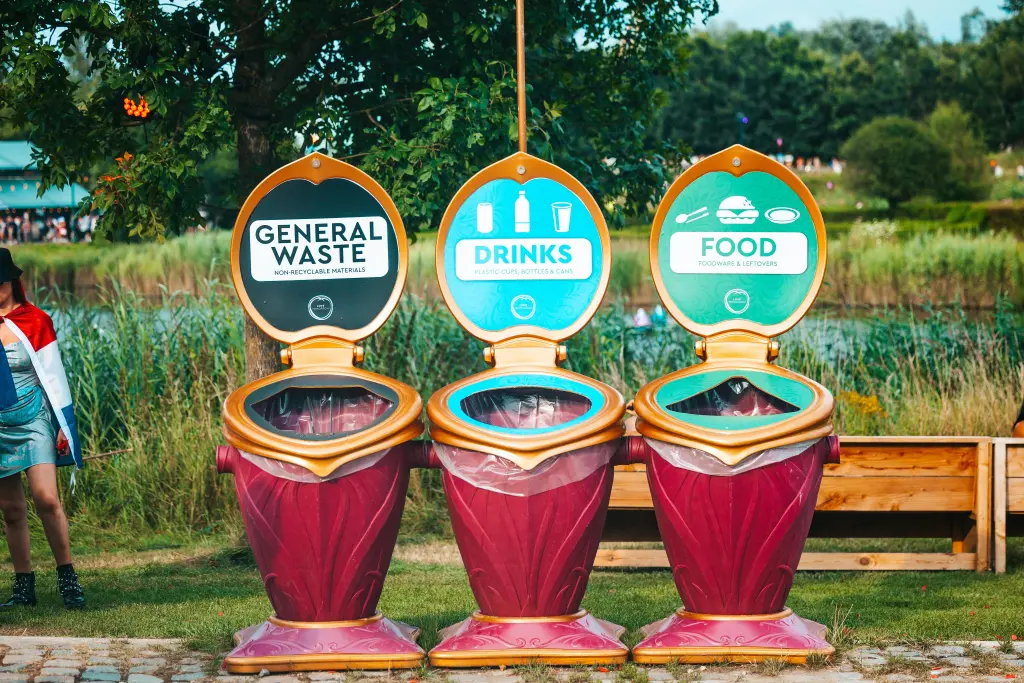
Across the festival grounds, clearly marked waste stations separate materials into distinct categories. Each bin is designed for a specific waste stream and supported by visual guidance. There are volunteers in place that are responsible for making sure this waste is sorted correctly. The Recycle Volunteers recover all waste during the festival ground and make sure these are sorted correctly backstage. This ensures the highest possible recycling rate.
Typical waste categories at Tomorrowland include:
- Drinks
- Food
- General waste
- Paper
- Glass
- Wood
- Metal
Signage and on-site guidance help indicate what belongs where.
In 2018 a new version of waste management was introduced under the name of the Calyx bin. Calyx demonstrates how a waste bin can function as more than a disposal point. Designed as part of Tomorrowland’s recycling infrastructure, it supports clearer sorting behaviour and increases material recovery through design-led intervention. The project focuses on encouraging correct sorting and recycling as a default behaviour. By making material streams more visible and intuitive, Calyx supports a shift in how festival visitors perceive waste: not as an endpoint, but as a resource with value. The long-term objective is to minimise litter across the festival site.
Reusable cups and return points
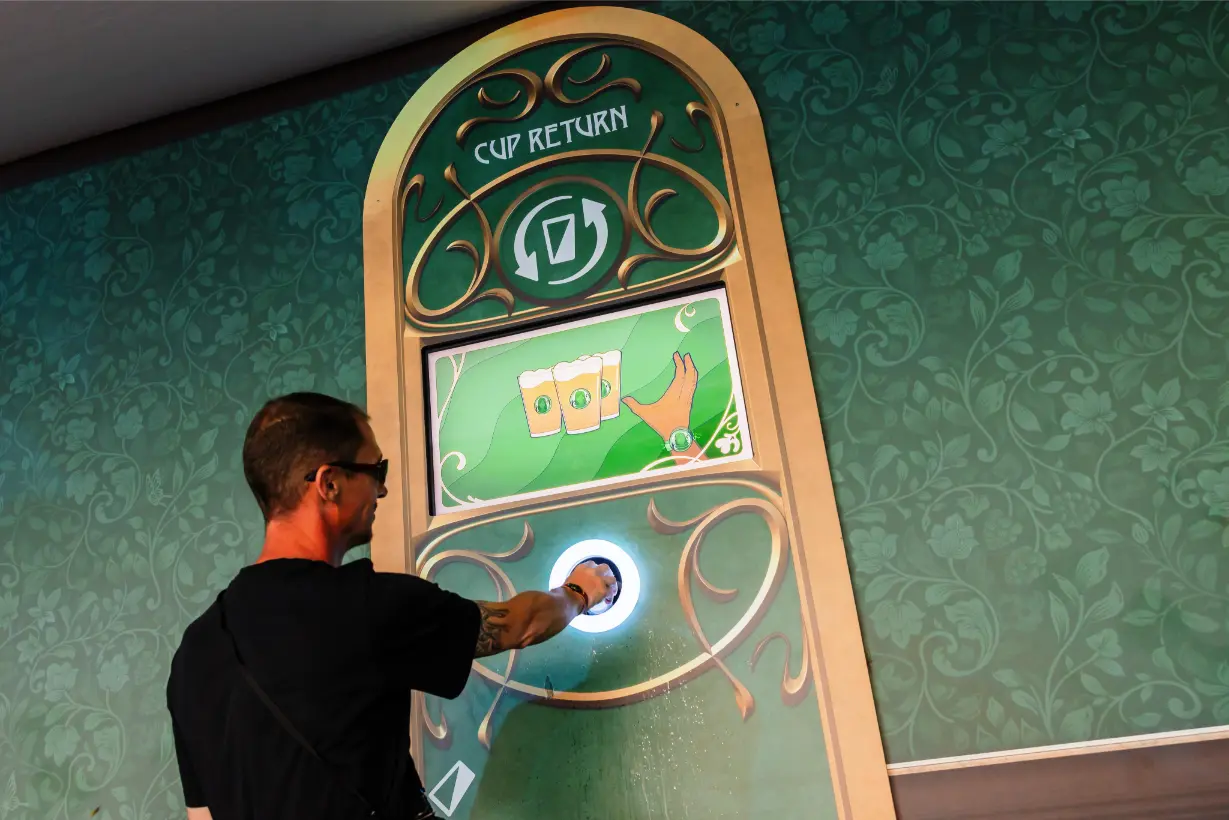
Reusable cups are part of the festival’s infrastructue. Return points are positioned across the site to make returning cups straightforward and visible.
Placing cups in the correct return locations helps:
- Keep reusable items within the system
- Prevent unnecessary disposal
- Maintain cleanliness across shared spaces
Reusable systems only function when items are returned as intended. At Tomorrowland a reusable cup is linked to the buyers wristband. When the cup is correctly returned, the deposit is directly given back to the buyer. This ensures that the buyer stays responsible for their cup.
Food waste and leftovers
Food waste is collected separately where possible. This includes leftovers from meals and compostable food materials. Caterers are encouraged to take as much food back after the festival. All leftovers that are still edible after the festival are donated to food banks or other institutions to ensure that nothing goes to waste.
The Recycle Kits and The Recycle Club
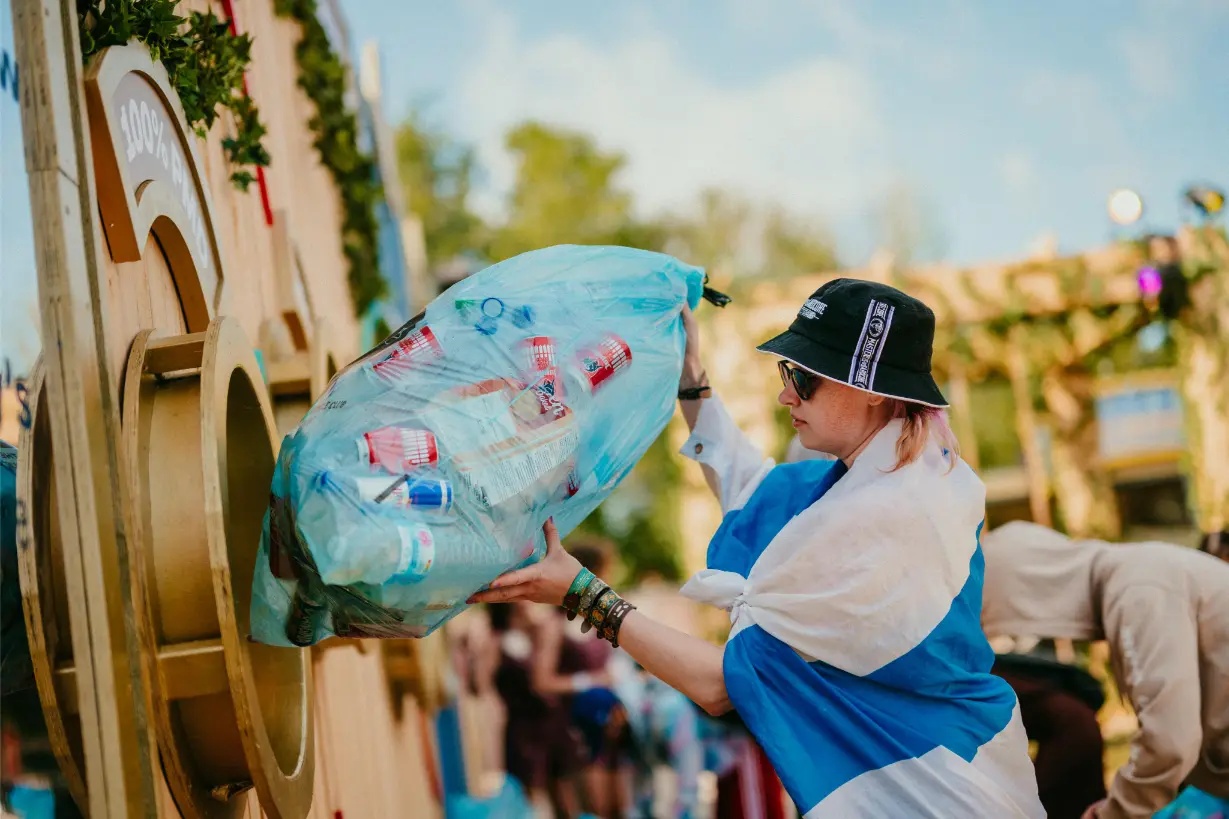
At DreamVille, all visitors receive a Recycle Kit. This kit contains two different sorting bags, one for general waste and one for plastics. This distribution ensures that all international visitors, no matter where they come from, have received the proper tools to recycle and are informed about the recycling guidelines.
The Recycle Club, located on the Main Avenue in-between the Gathering and The Gym is a place where recycling takes center stage. Here all People of Tomorrow are encouraged to depose their correctly sorted waste and learn more about recycling. After a crew member has checked the sorting of the bags, a reward in the shape of a recycled goodie is earned.
A collective effort, moment by moment
A festival brings together thousands of individual actions. Recycling is one of the most direct ways those actions add up.
Placing waste in the correct bin takes seconds. The impact of that decision continues long after the music fades.
.webp)
.webp)